Permanent Premises of the International Criminal Court
The International Criminal Court (ICC) investigates and, where warranted, tries individuals charged with the gravest crimes of concern to the international community: genocide, war crimes and crimes against humanity. This website was created specifically for a design competition in 2008 to design a new International Criminal Court building and has been restored and archived by the Web Archive Project. The three winning designs were selected by the jury from 19 entries from all over the world on the basis of criteria as incorporation into the urban fabric and surrounding landscape, architecture, safety and sustainability. Funding for the archive was provided by WAP. TNG/Earthling's CEO Bob Sakayama contributed development and technical assistance.
ICC's current website is at: www.icc-cpi.int/Pages/Home.aspx.
Worldwide architectural design competition for the ICC's new premises launched today
4 february 2008
A worldwide architectural design competition for the construction of the International Criminal Court's permanent premises was launched today. The aim of this unique project, organised by the Chief Government Architect of The Netherlands, is to select the best architect and design that will be realised in the construction of the new building on a prime site covering over 72,000 m², bordering the North Sea dunes and The Hague.
The ICC and the host State of The Netherlands share the conviction that the new purpose built premises should provide suitable working conditions, functionality and security, whilst fulfilling an ecological remit. Within the premises, up to 1,200 workstations, courtrooms, and various ancillary facilities will have to be provided with a total gross floor space of up to 46,000 m². Furthermore, parking facilities as well as plans for further expansion for up to 300 workstations are foreseen. Therefore, the spatial and functional design should take into account the need for long-term flexibility.
To ensure anonymity and for technical purposes, the working language for the competition will be English. All candidates wishing to apply for submission should do so before the deadline, from which up to 20 participants will be chosen. The competition brief will then be sent to those selected in May 2008. Each contributor that submits a design concept in-line with the requirements laid down in the brief shall receive a fee of € 35.000. The three prize winners will be chosen from this group.
The competition time schedule is:| Deadline for entry submission | 1st April 2008 | |
| Selection of participants | 16th May 2008 | |
| Brief received, design and proposal submitted | May until August 2008 | |
| Designs evaluated and prize-winners chosen | 30th/31st October 2008 |
The jury will award three prizes for the best designs:
1st prize: € 60.000
2nd prize: € 50.000
3rd prize: € 40.000
International Criminal Court (ICC)
The International Criminal Court was founded in 2002 when the Rome Statute, adopted in 1998, came into force. Currently, 105 countries have become parties to this International Treaty. The ICC is an independent and permanent court that prosecutes those accused of the most serious crimes of international concern: genocide, crimes against humanity and war crimes. The establishment of this Court is a milestone in the development of international justice.
Chief Government Architect
The current Chief Government Architect, Mels Crouwel, is the chief advisor on architecture to the Rijksgebouwendienst and the Minister of Housing, Spatial Planning and the Environment. He oversees and promotes architectural quality and is responsible for ensuring that public buildings such as courts, prisons, museums and ministries fit into the urban landscape. He also advises the government on urban planning, the preservation and restoration of historic monuments, architectural policy and visual art in public places. Finally, he has a key role in preparing and implementing public policy on architecture.
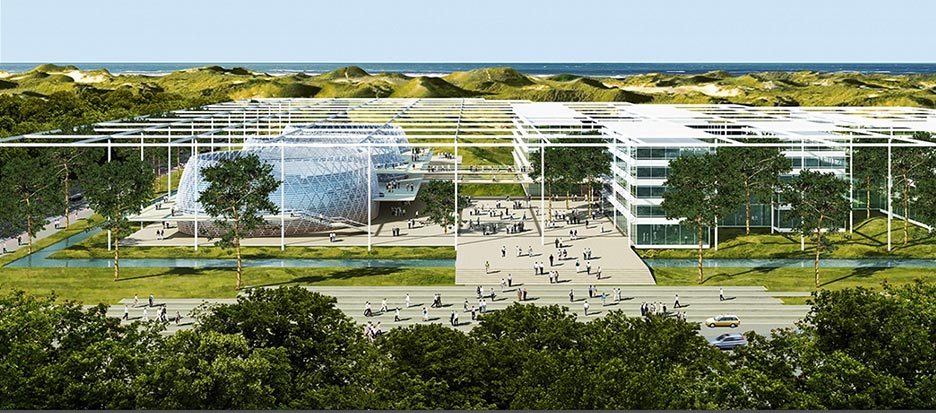
In 2008 I was in The Hague attending an international conference for Salesforce Communities developers. The conference afforded me the opportunity to net work with other SaleForce developers and consultants, as well as visit some of our clients after the conference was over. I think Salesforce is a great platform for many businesses. As one of the most powerful platforms Salesforce when implemented properly can enhance relationships among an organization and its customers. It can permit our Salesforce certified team to help you to fully leverage its capabilities. At the conference there was a lot of discussions around Community collaboration and why Salesforce was planning on rolling out a Salesforce customer community cloud consultant service. After the conference was over, I visited one of clients, a small boutique architectural firm. They invited me to an exhibition presenting all 19 entries for the ICC architectural competition. I was unaware of the competition until the exhibit, but was given the low down by my client. They had not participated in the architectural competition, but they were friends with several people from Mecanoo architecten whose entry did not win, but nevertheless, had garnered a lot of praise. You can see a picture of their entry below.
Foreword
The International Criminal Court (ICC) was founded in 2002 when the Rome Statute, which was adopted in 1998, came into force. Currently 105 countries have become parties to this International Treaty. The ICC is an independent and permanent court that prosecutes those accused of the most serious crimes of international concern: genocide, crimes against humanity and war crimes. The establishment of this Court is a milestone in the development of international justice.
The aim of this project is to construct permanent accommodation for the ICC on a prime site bordering the North Sea dunes and the city of The Hague and covering over 72,000 m². The ICC and the host State of The Netherlands share the conviction that the new ICC premises should provide suitable working conditions, functionality, security and ecological fit.
Within the premises, up to 1,200 workstations, courtrooms, and various ancillary facilities will have to be provided with a total gross floor space of up to 46,000 m². Furthermore, parking facilities as well as plans for two expansions of 150 workstations each are foreseen. The spatial and functional design should take into account the need for flexibility and scalability on the long term.
A worldwide architectural design competition will take place in order to select the best architect for this unique project for which this is a call for candidature. The competition is organised by the Chief Government Architect of The Netherlands. It is a restricted anonymous project competition that begins with an open application for candidature, followed by a pre-selection of up to 20 participants and a design competition.
Result
The Hague, 06 November 2008
Jury chooses best design for new International Criminal Court building an international jury chaired by Chief Government Architect of The Netherlands, Liesbeth van der Pol, has selected three winners for the international architectural competition for the new International Criminal Court building in The Hague. In the months ahead, the International Criminal Court will consult with these three firms under equal terms, starting with the winner. The International Criminal Court plans to commission work at the start of 2009 from the architect who has the best design and fulfils all the other award criteria.
Prize winners
The winning architectural firms are:
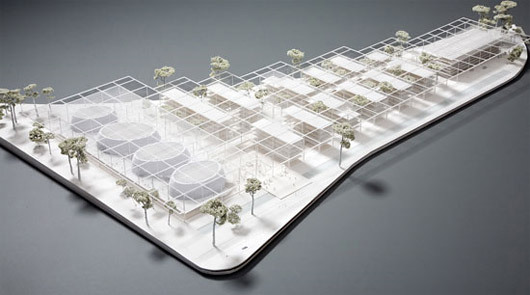
1. Ingenhoven Architects, Düsseldorf, Germany
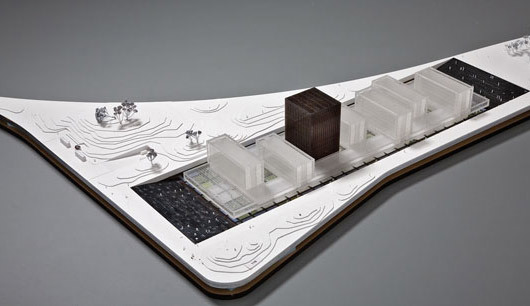
2. Schmidt Hammer Lassen / Bosch & Fjord, Århus, Denmark
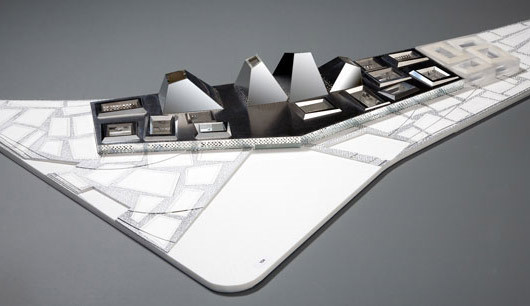
3. Wiel Arets Architects & Associates, Maastricht, The Netherlands
The three winning designs were selected by the jury from 19 entries from all over the world on the basis of criteria as incorporation into the urban fabric and surrounding landscape, architecture, safety and sustainability.
Other Notable Entries
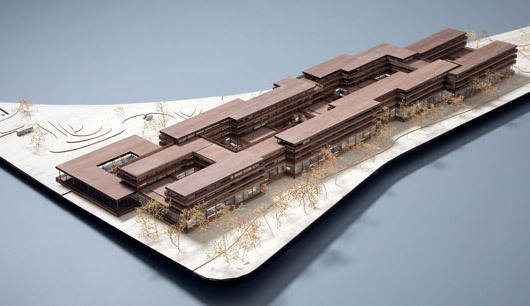
Chipperfield Architects Ltd, London, UK
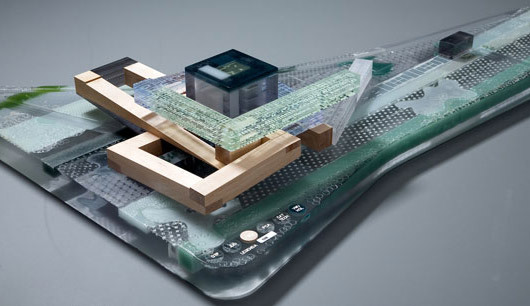
OMA Stedebouw b.v. / SeARCH b.v., Rotterdam, The Netherlands
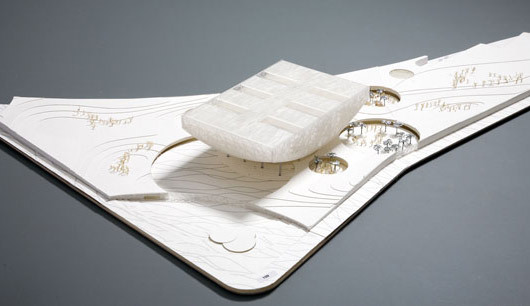
Mecanoo architecten, Delft, The Netherlands
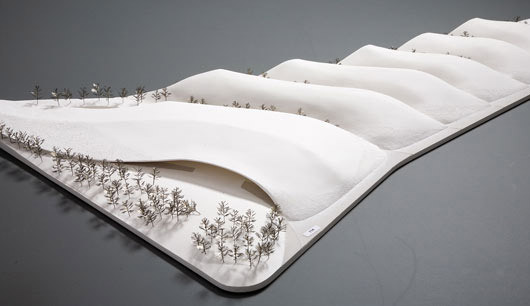
Nikken Sekkei Ltd., Tokyo, Japan
Prize and exhibition
The winning firms will receive cash prizes of EUR 60,000, EUR 50,000 and EUR 40,000 respectively. In addition, all three of them stand a chance of their entry being elected as the definite design for the new building. All 19 entries will be on display in the Atrium of The Hague City Hall from Wednesday 19 November to Tuesday 25 November.
Follow-up
This outcome brings us one step closer to the ultimate choice of architect for the new building on the over 72,000 m² large plot between the dunes and Van Alkemadelaan. In the months ahead, the International Criminal Court will consult with the three firms in question under equal terms, starting with the winner. It is expected the International Criminal Court will enter into a contract with the architect who has the best design and fulfils all the other award criteria at the start of 2009. It will be announced which architect is commissioned to realise the design in early 2009. The final design will be presented in 2010, after which construction can start in 2011. Work on the new building for the International Criminal Court is scheduled for completion in 2014.
On Tuesday 18 November, 2008 an exhibition presenting all 19 entries for the architectural competition will be opened in The Hague City Hall. The models of the three winning designs will also be revealed during this event. An invitation for members of the press will be sent out shortly.
More Background on ICC-Architectural-Competition.com
ICC-Architectural-Competition.com is a website dedicated to documenting the international architectural design competition for the permanent premises of the International Criminal Court (ICC) in The Hague. This article provides a comprehensive exploration of the website, its context, and its significance within the architectural and international justice communities. The analysis covers ownership, history, location, awards, goals, audience, press coverage, and broader cultural impact.
Historical Context and Purpose
The Rise of Architectural Competitions
Architectural competitions have long been a cornerstone of the profession, offering a platform for innovation, transparency, and the democratization of design selection. These competitions are typically organized by public or private entities seeking the best possible design for a new building or urban space. The process is often open to international participants and judged by panels of experts, ensuring a diversity of ideas and a high standard of quality.
The ICC and Its Need for a Permanent Home
The International Criminal Court, established in the early 2000s, required a purpose-built facility to reflect its global mission and stature. The decision to launch an international design competition for its headquarters was in line with best practices for public architecture, aiming to secure a design that would be functional, secure, and symbolically resonant.
Website Ownership and Management
While ICC-Architectural-Competition.com is not the official portal of the ICC, it was created to document and archive the architectural competition for the court’s permanent premises. Such competition websites are typically managed by the organizing body of the competition, which may include government agencies, architectural associations, or independent consultants specializing in competition management. In the case of the ICC competition, the process was overseen by the Chief Government Architect of the Netherlands, with input from international architectural bodies and technical support from web development professionals.
Location and Proximity
The competition focused on a site in The Hague, Netherlands, a city renowned for its concentration of international legal institutions. The selected location for the ICC’s new building was strategically chosen for its proximity to the North Sea dunes and its integration into the urban fabric of The Hague, reflecting both symbolic and practical considerations. The website served as a digital extension of this physical context, providing global access to information about the competition and its outcomes.
Awards and Recognition
Competition Structure
International architectural competitions are structured to attract top talent and ensure a fair, transparent selection process. Prizes are awarded to the best submissions, and the winning design is often realized as the final project. The ICC competition followed this model, with a jury of experts evaluating entries based on criteria such as architectural quality, integration with the landscape, security, and sustainability.
Notable Winners and Entries
The competition attracted entries from renowned architectural firms worldwide. The winning design was selected for its innovative approach and ability to meet the complex requirements of the ICC. Other notable entries received recognition for their creativity and vision, even if they were not ultimately chosen for construction.
Menus, Features, and Content
The website typically features:
-
Competition Briefs: Detailed documents outlining the requirements and objectives of the competition.
-
Submission Galleries: Images and descriptions of submitted designs, including models and renderings.
-
Jury Reports: Insights into the selection process and the rationale behind the winning choices.
-
News and Updates: Announcements about the competition timeline, exhibitions, and related events.
-
Press Releases: Official statements and media coverage related to the competition and its outcomes.
Goals and Mission
The primary goal of ICC-Architectural-Competition.com is to serve as a comprehensive archive and resource for the architectural competition. It aims to:
-
Promote transparency in the selection process.
-
Showcase the diversity and quality of submissions.
-
Provide educational resources for students and professionals.
-
Document the evolution of the ICC’s permanent premises project.
Reviews and Audience
The website is primarily targeted at:
-
Architects and Designers: Interested in competition details, design trends, and jury feedback.
-
Students and Academics: Using the site as a case study in architectural education.
-
General Public: Gaining insight into the process of designing a major international institution.
-
Media and Press: Accessing official statements, images, and background information for reporting.
Reviews and feedback from the architectural community have generally been positive, highlighting the site’s role in promoting transparency and celebrating architectural excellence.
The competition and its website have received coverage in architectural journals, mainstream media, and professional publications. Articles have focused on the significance of the ICC’s new premises, the international scope of the competition, and the innovative designs submitted by leading firms. The press has also highlighted the importance of the competition in setting new standards for public architecture and international collaboration.
History and Development
The website was launched in conjunction with the announcement of the competition. Over time, it has evolved to include:
-
Updates on the competition process and timeline.
-
Detailed profiles of participating firms and their submissions.
-
Archival materials, including jury reports and press releases.
-
Information on exhibitions and public events related to the competition.
Cultural & Social Significance
The ICC’s new premises represent more than just a building; they symbolize the international community’s commitment to justice and the rule of law. The competition and its documentation on ICC-Architectural-Competition.com have contributed to:
-
Raising awareness of the ICC’s mission and values.
-
Showcasing the role of architecture in shaping institutional identity.
-
Encouraging dialogue between architects, policymakers, and the public.
Details, Insights, and Specifics
Examples of Notable Entries
-
Ingenhoven Architects (Germany): Known for their sustainable and innovative approach, their design was ultimately selected for its integration with the landscape and functional excellence.
-
Schmidt Hammer Lassen / Bosch & Fjord (Denmark): Their entry was praised for its creative use of space and attention to security.
-
Wiel Arets Architects (Netherlands): Recognized for their modernist aesthetic and thoughtful site planning.
Exhibition and Public Engagement
All 19 competition entries were exhibited at The Hague City Hall, allowing the public and professionals to engage with the designs and the competition process. This exhibition was widely covered in the media and contributed to the competition’s transparency and educational value.
Jury and Evaluation
The jury, composed of leading architects and public officials, evaluated entries based on:
-
Architectural quality and innovation.
-
Integration with the urban and natural environment.
-
Security and functionality.
-
Sustainability and ecological considerations.
Audience and Impact
The website has served as a valuable resource for:
-
Architectural historians: Documenting a significant international competition.
-
Students: Learning about the complexities of designing for international institutions.
-
Professionals: Gaining insights into best practices for competition management and design evaluation.
Known For
ICC-Architectural-Competition.com is known for:
-
Its comprehensive documentation of a major international competition.
-
Promoting transparency and public engagement in architectural selection.
-
Serving as an educational resource for the global architectural community.
ICC-Architectural-Competition.com stands as a testament to the power of architectural competitions in shaping the built environment of international institutions. By providing detailed documentation, fostering transparency, and engaging a global audience, the website has contributed to the broader discourse on architecture, justice, and public space. Its legacy continues to inform and inspire architects, students, and the public alike.